
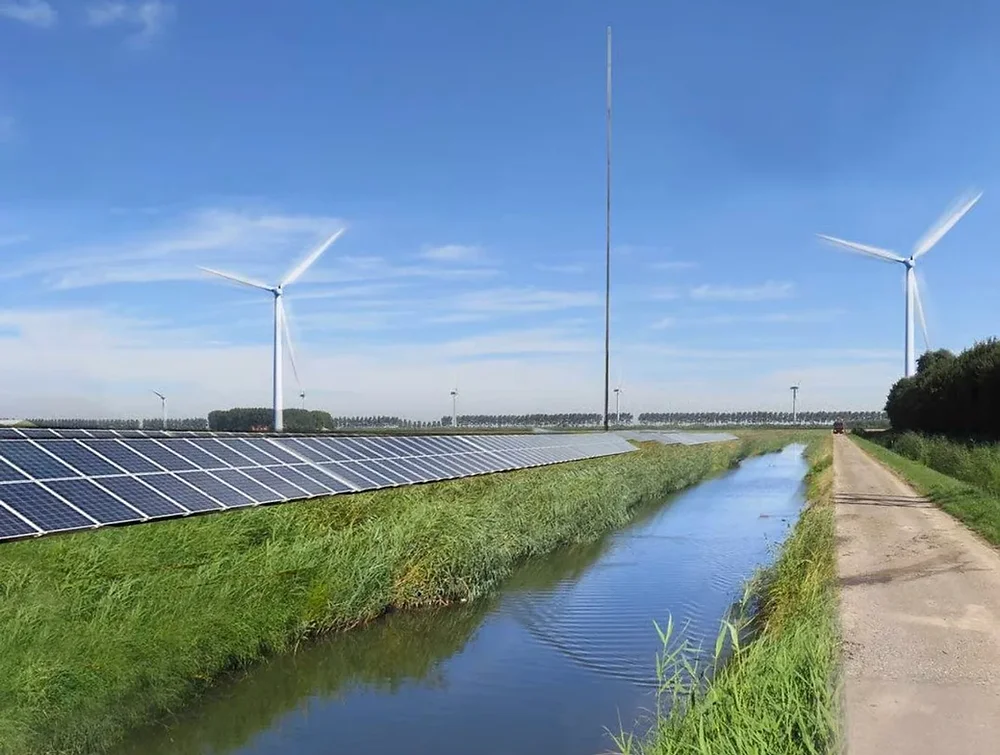
The World Economic Forum (WEF), in collaboration with Accenture, has released a report detailing how various countries are participating in the global energy transition. This report highlights the progress made and challenges faced by nations in their efforts to shift towards sustainable energy sources.
According to the report, over 60 countries have adopted national energy transition strategies, which include commitments to reduce greenhouse gas emissions and increase the share of renewable energy in their energy mix. For instance, countries such as Denmark and Germany have set ambitious targets of achieving 70% and 65% renewable energy in their electricity generation by 2030, respectively.
The report emphasizes the importance of investment in renewable technologies. It notes that global investment in renewable energy reached $500 billion in 2022, a figure that reflects a growing trend as nations recognize the economic benefits of clean energy. In particular, solar energy investments have surged, accounting for nearly half of all new power generation capacity installed worldwide last year.
However, the report also points out significant disparities between countries. While developed nations are making substantial strides, many developing countries struggle with access to financing and technology. For example, only 20% of the investment in renewable energy is directed towards emerging economies, which face higher costs and barriers to entry.
The collaboration between WEF and Accenture aims to create a roadmap for these nations, offering guidance on policy frameworks, financing mechanisms, and technology adoption that can accelerate their transition. The report suggests that by enhancing international cooperation and sharing best practices, countries can better overcome obstacles and align their efforts with global climate goals.
Additionally, the report highlights the role of public-private partnerships in driving innovation and scaling up renewable energy projects. It identifies that successful examples, such as the collaboration between government agencies and private companies in the United States, have led to increased deployment of wind and solar energy technologies.
In summary, the WEF and Accenture’s report serves as a call to action for countries worldwide to intensify their efforts in transitioning to renewable energy. By focusing on investment, collaboration, and policy alignment, nations can not only address climate change but also stimulate economic growth and create jobs in the renewable energy sector.



 English
  Arabic