
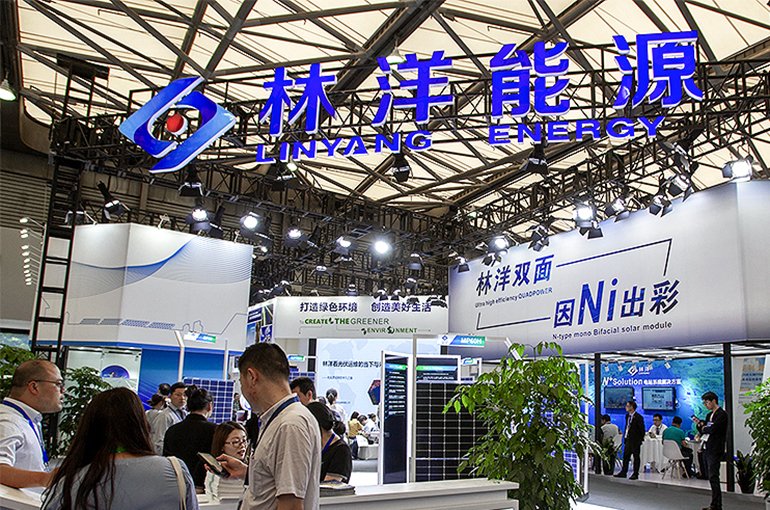
Jiangsu Linyang Energy plans to establish energy storage facilities abroad, targeting Southeast Asia, Europe, and the Middle East, with Europe as its primary focus. In a recent interview with Yicai, Vice Chairman Lu Danqing emphasized the strong demand for energy storage solutions in Europe, attributing it to the aging power grid and supportive storage policies in the region.
Linyang has identified Poland as a strategic entry point into the European market, with plans to construct an energy storage plant there. In the third quarter of last year, the company set up a sales and technical support center in Warsaw, complete with a dedicated team to handle its energy storage business.
In addition to its European efforts, Linyang operates a smart meter factory in Indonesia. Depending on local regulations, the company may expand its operations to include energy storage production at this site. Furthermore, Linyang has formed a joint venture in the Middle East to build an energy storage factory alongside its partner ECC, which will produce both smart meters and energy storage systems.
Southeast Asia also marks a key area of growth for Linyang, with an operational energy storage center in Jakarta, Indonesia, where a full team is already in place. Since the second half of 2022, Linyang has concentrated on expanding its presence in international markets. Management anticipates that 2025 will mark the year of substantial international sales of its energy storage products.
The global energy storage market experienced a notable surge last year, with newly installed capacity rising by 76% to reach 69 gigawatts, equivalent to 169 gigawatt hours. According to BloombergNEF, the market is projected to grow at a compound annual growth rate of 17.1% through 2035, reaching an annual new capacity of 228 gigawatts and 965 gigawatt hours. This growth trajectory surpasses that of both wind and solar energy during the same period, underscoring the escalating importance of energy storage in the renewable energy sector.
Linyang operates in three primary business segments: smart grids, renewable energy, and energy storage. The energy storage division focuses on solutions for renewable power generation, independent energy storage power stations, industrial and commercial energy storage systems, and user-side microgrid applications that combine solar energy with storage capabilities.

 English
  Arabic