
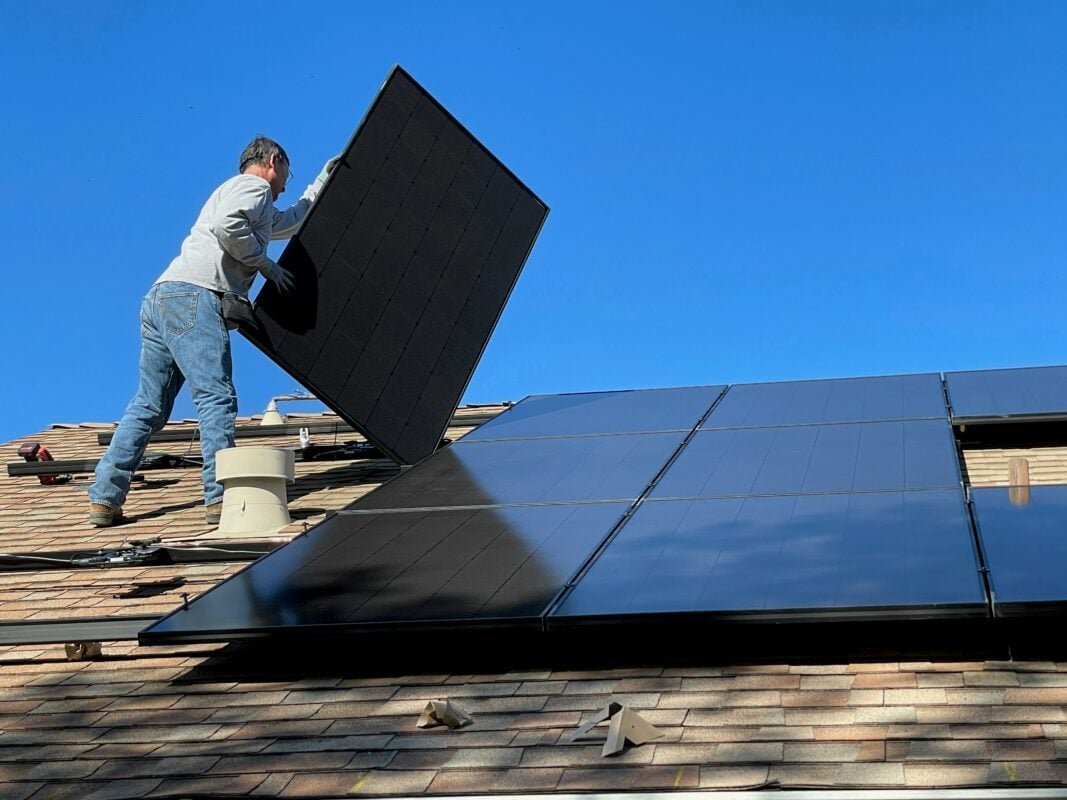
The European solar market is experiencing rapid growth, with significant increases in installed photovoltaic (PV) capacity. Christophe Lits, a market analyst at SolarPower Europe, reports that Europe installed approximately 60 gigawatts (GW) of solar PV in 2023, a notable increase from 58 GW in 2022. The cumulative operating capacity now stands at 269 GW, with projections indicating that the workforce could exceed one million by 2027 and reach 1.4 million by 2028.
In response to this demand, the European Institute of Innovation and Technology (EIT) InnoEnergy launched the European Solar Academy last summer. This initiative, part of the Net-Zero Academies established by the European Commission, aims to enhance training and reskilling programs for solar energy workers across Europe. With its first anniversary approaching, the Academy is on track to train 65,000 workers by mid-2026, focusing on standardizing qualifications and certifications in the solar sector.
While installation jobs currently dominate the solar workforce — accounting for 87% of positions in 2023 — this share is expected to decrease to 79% by 2028. Jacqui Wigg and Oana Penu from EIT InnoEnergy emphasize the need to differentiate between rooftop and utility-scale installations. Although utility-scale projects are growing quickly, rooftop installations remain the largest employer due to their labor-intensive nature. Currently, over 31% of solar jobs in the EU are in utility-scale sectors, while the rest are primarily in rooftop deployments.
The demand for solar jobs remains high despite recent macroeconomic challenges affecting new installations. While residential rooftop projects have slowed due to lower electricity prices, commercial and industrial rooftop installations are gaining traction as businesses seek energy independence. Wigg and Penu predict growth driven by technological advancements, supportive government policies, and the ongoing energy transition.
To meet the rising demand, the European Solar Academy is establishing a comprehensive skills framework aligned with identified critical roles across the solar value chain. This includes collaborating with stakeholders like SolarPower Europe, the Association of European Renewable Energy Research Centers, and the European Commission to ensure training meets industry needs and supports workforce mobility.
Standardizing qualifications is a key objective for the Academy. A notable project includes developing a credential for solar installers, which will serve as a benchmark of competence. This will help employers identify qualified candidates and enhance mobility across EU member states.
Additionally, the Academy will focus on reskilling workers from adjacent industries. Wigg and Penu highlight partnerships with new solar manufacturing companies to retrain individuals from sectors like traditional manufacturing. While transferable skills are valuable, they will also need to acquire solar-specific competencies.
Lits expresses caution about relying too heavily on transitioning workers from other industries, particularly for rooftop installation roles, indicating that direct skills may not be easily transferable. He remains open to exploring potential synergies, especially between the solar sector and other areas of the energy industry.
Looking ahead, training practices in European solar will need to adapt as the industry evolves. Wigg and Penu point out the growing emphasis on manufacturing roles as Europe aims to solidify its solar supply chain. Partnerships with local organizations are underway to ensure timely training of talent necessary for upcoming manufacturing projects.
Overall, the European Solar Academy is focused on maintaining a dynamic approach to workforce development, ensuring that training programs reflect current trends and meet the evolving demands of the solar energy sector.
 Arabic
  English