
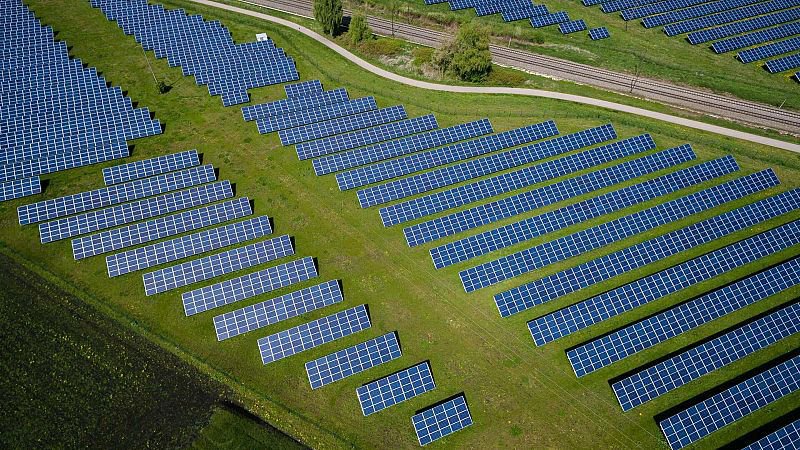
In June 2025, solar power generated more electricity than any other source in the European Union for the first time. According to data from the energy think tank Ember, solar accounted for 22.1% of the EU’s electricity mix, surpassing nuclear and outpacing fossil fuels significantly. Thirteen EU member states set new monthly solar power records, with the Netherlands producing 40.5% of its electricity from solar and Greece reaching 35.1%. This surge is attributed to increased solar capacity and a favorable stretch of sunny weather.
As solar generation rises, the EU’s dependence on coal has drastically decreased. Only 6.1% of electricity in the EU came from coal, a drop from 8.8% the previous year, marking the lowest level on record. Germany and Poland, the largest coal consumers in the EU, reported record lows with Germany generating just 12.4% of its power from coal and Poland at 42.9%. Other countries, including Czechia (17.9%), Bulgaria (16.7%), and Denmark (3.3%), also reached new lows in coal power usage. Notably, ten EU states, including Ireland, have completely eliminated coal from their energy mix, with Ireland officially closing its last coal plant on June 20. Spain and Slovakia have plans to phase out coal by 2025 as well.
The strong public support for renewable energy in Europe has played a part in this shift. The European Commission indicates that nearly 90% of Europeans favor actions to boost renewable energy sources. Many citizens resonate with the tangible benefits of rooftop solar, such as lower bills and reduced reliance on unstable fossil fuel markets. Community energy schemes that offer discounts, shared ownership, or job creation also receive consistent backing. Projects that involve communities early and share financial benefits show higher success rates, contributing to the growth of solar capacity.
Since 2008, solar’s share of Europe’s renewable energy mix has jumped from 1% to 20.5% in 2023, according to the Commission. Ember analyst Chris Rosslowe noted that the recent record achievements are not solely due to favorable weather but also the continuous addition of new solar installations.
While the milestone of solar surpassing coal is noteworthy, experts suggest it is merely a preview of future possibilities. A study by the Global Energy Monitor indicates that repurposing closed coal mines into solar farms could generate sufficient electricity to power a country the size of Germany. In total, over 1.2 million hectares of former coal sites in Europe could be transformed into clean energy production areas.
Wind power also contributed to this energy transition, making up nearly 16% of EU electricity in May and June, the highest-ever share for these months. Despite these advances in renewable energy, fossil fuels still accounted for about 25% of EU electricity in June, underscoring ongoing challenges during periods when solar and wind generation declines.
Experts emphasize the need for enhanced energy storage solutions, smarter grid management, and improved demand-side planning to maintain and expand renewable energy utilization. Rosslowe highlighted that low-cost renewables are helping stabilize the energy market against fluctuating fossil fuel prices. The next significant opportunity lies in integrating battery storage and flexible energy management to extend renewable energy use into times when solar and wind generation is lower.

 English
  Arabic